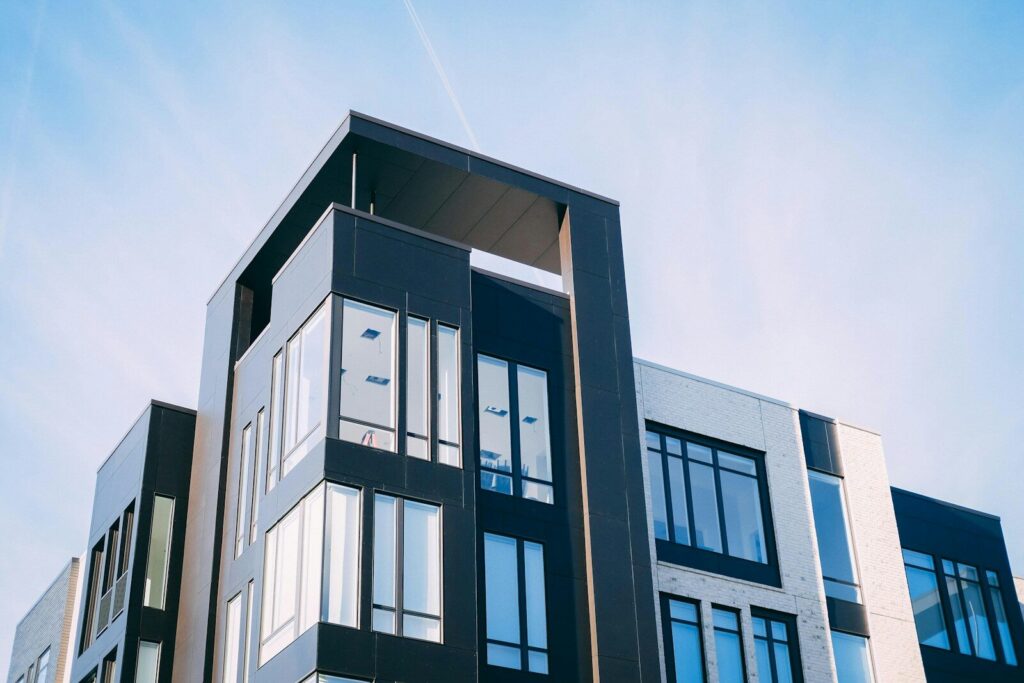
Insurance Built for California Apartment Building Risks
California Apartment Building Insurance helps protect multifamily property owners against covered damage, premises liability claims, lost rental income and other risks associated with owning residential rental property.
Apartment buildings bring together valuable physical assets, residents, employees, contractors, amenities, building systems and a continuing stream of rental income. Those exposures require more than a basic commercial property policy.
Sacco & Sacco Insurance Brokers helps California property owners coordinate commercial insurance and risk-management needs. As an independently owned California brokerage serving businesses for more than 20 years, Sacco & Sacco provides relationship-focused guidance through a dedicated associate who learns how each property and ownership organization operates.
What Can Apartment Building Insurance Include?
Coverage should reflect the building, residents, operations and ownership structure. Depending on the property, an apartment insurance program may include:
- Commercial property insurance: Can protect the insured building, permanently installed equipment and other covered property against specified causes of loss.
- General liability insurance: May respond to covered claims involving tenant, visitor or third-party bodily injury, property damage and personal or advertising injury.
- Business income and loss-of-rents coverage: May help replace qualifying rental income and continuing expenses when a covered property loss makes units temporarily uninhabitable.
- Ordinance or law coverage: Can help address eligible increased costs associated with demolition, undamaged portions of a building and legally required code upgrades following covered damage.
- Equipment breakdown insurance: May cover certain sudden mechanical, electrical or pressure-system breakdowns involving boilers, HVAC equipment, electrical systems and other building machinery.
- Commercial umbrella or excess liability: Can provide additional limits above specified underlying liability policies.
- Commercial flood insurance: May protect eligible buildings and property from covered flood damage commonly excluded by standard commercial property policies.
- Earthquake insurance: May be available separately to address earth-movement risks generally excluded by standard commercial property policies.
- Workers’ compensation insurance: May be needed when the ownership or operating entity employs property managers, leasing staff, maintenance personnel or other workers.
- Employment practices liability insurance: May address certain covered employment-related allegations when the organization has employees.
- Cyber and crime coverage: Can help address eligible risks involving tenant data, online rent payments, employee dishonesty and fraudulent funds transfers.
Coverage availability varies by property, location, occupancy, condition and carrier eligibility.
Which Apartment Building Risks Should Be Reviewed?
Important exposures can extend far beyond the building’s exterior walls. An apartment insurance review should consider:
- Fire, smoke, water and weather damage
- Aging roofs, plumbing, electrical and HVAC systems
- Tenant and visitor slips, falls and injuries
- Loss of rental income following covered damage
- Building-code upgrades after a loss
- Wildfire, earthquake and flood exposures
- Vacancy, renovation and construction activity
- Pools, fitness centers, playgrounds and shared amenities
- Balconies, stairs, elevators, gates and parking structures
- Security systems, lighting and access controls
- Laundry rooms, boilers and mechanical equipment
- On-site employees and maintenance operations
- Contractors and vendor insurance requirements
- Student, senior, affordable or short-term housing exposures
- Solar panels, battery systems and electric-vehicle chargers
- Habitability-related allegations and tenant disputes
A useful review should address both the likelihood of a loss and the financial consequences of rebuilding, relocating residents and restoring rental income.
Who May Need Apartment Building Insurance?
This coverage may be appropriate for:
- Individual apartment-building owners
- Real estate investment companies
- Ownership LLCs and partnerships
- Multifamily developers and operators
- Family offices and private investors
- Apartment syndicators
- Owners of duplexes and small multifamily buildings
- Owners of large apartment complexes
- Mixed-use buildings with residential units
- Organizations with multi-property portfolios
Sacco & Sacco is particularly well suited to established owners and operators with multiple properties, employees or several interconnected insurance needs.
What Should California Apartment Owners Consider?
California apartment buildings face significant regional differences in catastrophe exposure, construction costs and carrier availability.
A California-focused insurance review should consider:
- Wildfire exposure and defensible-space conditions
- Earthquake risk and building construction
- Flood zones and surface-water exposure
- Distance from fire protection and emergency services
- Current replacement costs rather than market value
- Accurate square footage and statements of value
- Building age, construction type and system updates
- Roof, plumbing, electrical and HVAC condition
- Seismic retrofits and other structural improvements
- Local building codes and potential upgrade costs
- Vacancy rates, renovations and planned construction
- Rental-income limits and restoration periods
- Tenant mix, unit count and property amenities
- Lender insurance requirements
- Geographic concentration within a property portfolio
Market value, outstanding loan balance and reconstruction cost are different figures. Property limits should be evaluated using appropriate building valuations and current rebuilding information.
How Does Sacco & Sacco Help?
- Understand the property: Review the building, location, occupancy, construction, systems, amenities, employees and ownership structure.
- Assess the exposures: Identify catastrophe risks, valuation concerns, liability exposures, coverage gaps and lender requirements.
- Structure the program: Compare appropriate carrier options, property limits, deductibles, liability limits, endorsements and supporting policies.
- Support the relationship: Help with ongoing policy service, certificates, renewals and changes as properties are acquired, renovated or sold.
Apartment Building Insurance FAQ
What does apartment building insurance cover?
Depending on the policy, apartment building insurance may cover the insured structure, specified property, premises liability, loss of rental income, equipment breakdown and other scheduled exposures. Every policy contains its own limits, exclusions, deductibles and conditions.
Is apartment building insurance the same as homeowners insurance?
No. Homeowners insurance is generally designed for owner-occupied residential property. Apartment buildings and other income-producing multifamily properties typically require commercial insurance designed around rental operations and commercial exposures.
Are tenants’ belongings covered by the building owner’s policy?
Generally, the building owner’s policy is not intended to insure a tenant’s personal belongings or personal liability. Tenants should obtain their own renters insurance, subject to applicable lease terms and legal requirements.
Does apartment building insurance cover lost rent?
Business income or loss-of-rents coverage may replace qualifying rental income when operations are interrupted by covered physical damage. Coverage depends on the cause of loss, selected limit, restoration period and policy terms.
Are earthquake and flood damage included?
Usually not automatically. Standard commercial property policies commonly exclude earthquake and flood damage. Separate earthquake or commercial flood coverage may be available and should be considered based on the property’s location, financing and risk tolerance.
Does the policy cover water damage?
Some sudden and accidental water damage may be covered, while flooding, groundwater, sewer backup, repeated leakage, deferred maintenance and other causes may be restricted or excluded. The source of the water and policy language determine how coverage may apply.
Can several apartment buildings be insured together?
Depending on carrier eligibility and ownership structure, multiple buildings may be scheduled within a portfolio or master insurance program. Each location should still have accurate property values, construction details, occupancy information and coverage considerations.
How much does apartment building insurance cost in California?
Pricing depends on location, unit count, construction type, building age, updates, replacement value, occupancy, amenities, catastrophe exposure, claims history, limits, deductibles and carrier eligibility. A tailored quote is necessary to estimate cost.
What information is needed to request a quote?
Apartment-building owners should be prepared to provide:
- Property address and ownership information
- Number of buildings and residential units
- Construction type and year built
- Square footage and occupancy
- Roof, plumbing, electrical and HVAC updates
- Current building and rental-income values
- Amenity and security information
- Employee and payroll details, when applicable
- Current insurance policies
- Requested limits and deductibles
- Recent loss history
- Lender insurance requirements
Complete and accurate property information helps carriers evaluate the account.
Request an Apartment Building Insurance Quote
Your apartment building is both a physical asset and a source of ongoing income. Its insurance program should address both.
Complete the Request a Quote form on this page. Sacco & Sacco will use the information you provide to begin evaluating your property, coverage needs and next steps.
Request a Quote →
Coverage availability, eligibility, limits, exclusions and terms vary by carrier and policy. This page provides general information and is not legal advice or a guarantee of coverage.
Request a Quote